
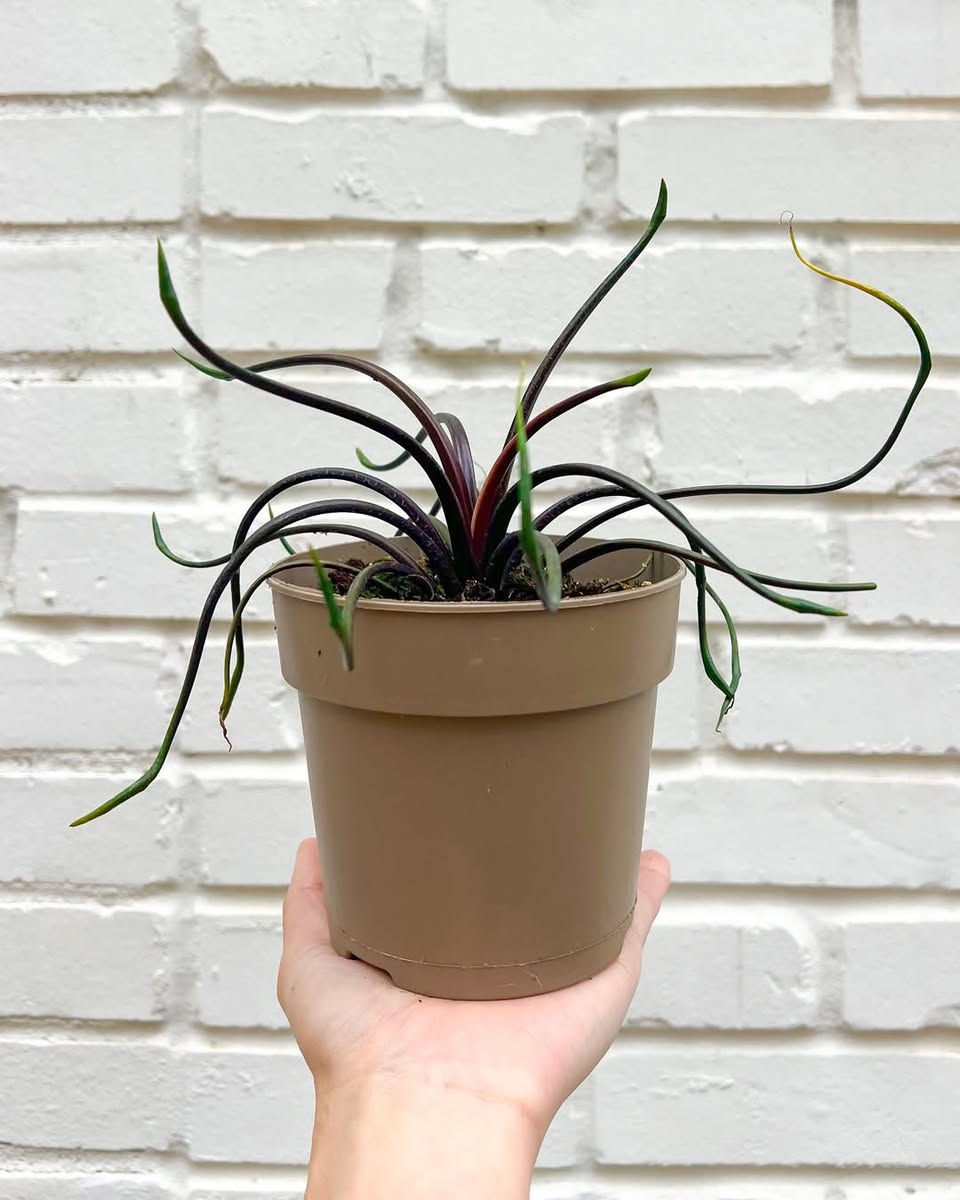
Alocasia 'Flying Squid'
🌿 The Alocasia 'Flying Squid', a cultivar within the Araceae family, showcases one of the most distinctive leaf forms in the aroid world. Native to tropical Southeast Asian rainforests where Alocasia species thrive in humid, shaded understories, this particular variety has been selectively bred for its remarkable foliage that resembles tentacles reaching outward. With deeply lobed, narrow leaves that cascade and twist in unpredictable directions, it creates a sculptural presence unlike traditional heart-shaped Alocasias. This is an intermediate-level plant that rewards attentive care with dramatic growth. Fun fact: the common name comes from the leaf segments that split and curl like a squid's arms, making each leaf genuinely unique in its final form.
FOLIAGE AND GROWTH HABIT
This Alocasia grows in an upright to slightly spreading habit, with each leaf emerging on sturdy petioles from a central rhizome. The leaves are deeply divided into narrow, elongated lobes that can number anywhere from five to nine segments per leaf, each tapering to a fine point. Colour ranges from deep emerald green to darker forest tones with prominent lighter veining that traces each lobe. The texture is smooth yet substantial, with a slight waxy coating that gives the surface a subtle sheen. As new leaves unfurl, they're tightly coiled and gradually spread into their distinctive squid-like shape over several days.
FLOWER DETAILS
Like most Alocasias, the 'Flying Squid' can produce flowers, though they're infrequent when grown indoors and not the plant's main attraction. The inflorescence consists of a pale cream to greenish-white spathe that wraps around a spadix, typical of the aroid family structure. There's no noticeable fragrance, and the flowers themselves are small and understated compared to the dramatic foliage. Most growers find the blooms interesting but not particularly showy. Flowering typically occurs during the growing season when the plant is mature and receiving optimal care. To encourage the rare bloom, maintain consistent warmth, high humidity, and regular feeding during spring and summer, though many enthusiasts prefer to remove flower buds to redirect energy into leaf production.
CARE INSTRUCTIONS
- 🌞 Light: Bright indirect light is essential; avoid direct sun which scorches leaves. Needs 6-8 hours of filtered light daily, ideally from an east or north-facing window
- 💧 Water: Keep soil consistently moist but not waterlogged during growing season (spring/summer); reduce frequency in fall/winter. Water when top 2-3 cm of soil feels dry. Bottom watering or slow, thorough top watering works best to avoid stem rot
- 🌡️ Humidity: Requires 60-80% humidity; struggles below 50%. Use a humidifier or pebble tray, especially in winter
- 🪴 Soil: Well-draining, airy mix with chunky components like orchid bark, perlite, and peat or coco coir. Must not stay compacted
- 🏺 Potting: Use a pot with drainage holes, terracotta or plastic both work. Choose a size just slightly larger than the rhizome with room for one season's growth. Repot every 1-2 years in spring
- 🌱 Growth rate: Moderate to fast during growing season, producing 1-2 new leaves per month. Can reach 40-60 cm in height within a year. Mature size typically 60-90 cm tall and wide
- 👩🌾 Fertilizing: Feed every 2-3 weeks during spring and summer with diluted balanced liquid fertilizer (20-20-20). Stop or reduce to monthly in fall/winter
- 🐾 Pet friendly: No. Toxic to cats, dogs, and humans if ingested due to calcium oxalate crystals. Can cause mouth irritation, drooling, and digestive upset. Keep away from curious pets and children
WHERE TO PUT IT
The 'Flying Squid' thrives in bathrooms with windows, kitchens with good natural light, or living rooms where a humidifier runs regularly. It makes a stunning statement piece on a plant stand or shelf where its unusual leaves can be appreciated from multiple angles. Consider placing it near east-facing windows with sheer curtains or a few feet back from south or west windows. Group it with other tropical plants to create a microclimate that boosts ambient humidity. Avoid placing it near heating vents, air conditioners, cold drafts from doors, or in rooms that drop below 15°C at night. Keep away from areas with low light or dry air, such as windowless bathrooms, dark corners, or directly above radiators.
