
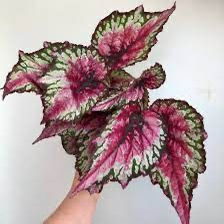
Begonia Red Salsa
🌿 Begonia Red Salsa is a stunning Rex Begonia cultivar (Begonia rex-cultorum) from the Begoniaceae family, originating from the tropical rainforests of Southeast Asia. This begonia features dramatic foliage that makes it a standout choice for intermediate plant enthusiasts who appreciate bold colour and texture. In its natural habitat, Rex Begonias grow as understory plants beneath the forest canopy, thriving in humid, shaded conditions with rich, organic soil. Fun fact: Begonias have been cultivated for over 200 years, and there are now more than 1,900 species and countless hybrids, making them one of the most diverse plant families in cultivation.
FOLIAGE AND GROWTH HABIT
This beauty grows in a compact, bushy habit with a rhizomatous root system that spreads horizontally. The leaves are the main attraction—large, asymmetrical, and heart-shaped with deeply textured surfaces that feel almost quilted to the touch. Each leaf displays a rich palette of deep burgundy red, crimson, and dark green with metallic silver highlights that catch the light beautifully. The underside of the leaves reveals a deep purple-red colour that adds another layer of visual interest when the plant is viewed from different angles.
FLOWER DETAILS
Begonia Red Salsa produces delicate clusters of small pink or white flowers on tall, thin stems that rise above the foliage. The flowers are dainty and simple in shape, with four rounded petals that create a soft, feminine appearance. While not particularly fragrant, they add a gentle charm to the already impressive foliage display. This cultivar flowers sporadically throughout the year, most commonly in spring and summer when growing conditions are optimal. To encourage more frequent blooming, provide consistent humidity levels above 50%, feed with a balanced liquid fertilizer every three to four weeks during the growing season, and ensure the plant receives bright, filtered light without direct sun exposure.
CARE INSTRUCTIONS
- 🌞 Light: Bright, indirect light is essential. Avoid direct sunlight which scorches the delicate leaves. East or north-facing windows work perfectly. Needs approximately 6-8 hours of filtered light daily.
- 💧 Water: Keep soil consistently moist but never waterlogged. Water when the top inch of soil feels dry—usually every 3-5 days in summer, weekly in winter. Bottom watering works best to avoid water on leaves, which can cause spotting and rot.
- 🌡️ Humidity: Thrives in 50-70% humidity. Use a humidifier, pebble tray, or group with other plants. Low humidity causes crispy leaf edges and stunted growth.
- 🪴 Soil: Light, airy, well-draining mix. Combine peat moss, perlite, and orchid bark in equal parts. Soil must retain some moisture while allowing excess water to drain quickly.
- 🏺 Potting: Shallow, wide terracotta or ceramic pots with drainage holes work best for the rhizomatous root system. Choose pots 1-2 inches wider than the root ball. Repot every 12-18 months in early spring when roots fill the container.
- 🌱 Growth rate: Moderate grower. Expect 2-4 new leaves per month during active growth. Reaches 10-12 inches tall and 12-15 inches wide within one year. Maximum mature size is approximately 16 inches in height and 18-20 inches in spread.
- 👩🌾 Fertilizing: Feed every 3-4 weeks from spring through early fall with a balanced liquid fertilizer diluted to half strength. Skip fertilizing in winter when growth naturally slows. Use a formula with equal NPK ratios like 10-10-10.
- 🐾 Pet friendly: No. Begonias contain oxalates which are toxic to cats and dogs. Ingestion causes oral irritation, excessive drooling, vomiting, and difficulty swallowing. Keep out of reach of curious pets.
WHERE TO PUT IT
Begonia Red Salsa shines in bathrooms where natural humidity levels are higher, making it easier to maintain the moisture this plant craves. It also does wonderfully on kitchen counters away from cooking heat, in bedrooms on dressers or nightstands where it can be admired up close, or in living rooms on plant stands or shelves where its dramatic foliage becomes a focal point. A terrarium or glass cabinet provides ideal conditions if you struggle with humidity. Avoid placing it near heating vents, air conditioning units, or drafty windows, as temperature fluctuations and dry air will damage the leaves. Keep away from south or west-facing windows where harsh afternoon sun can burn the foliage.
