
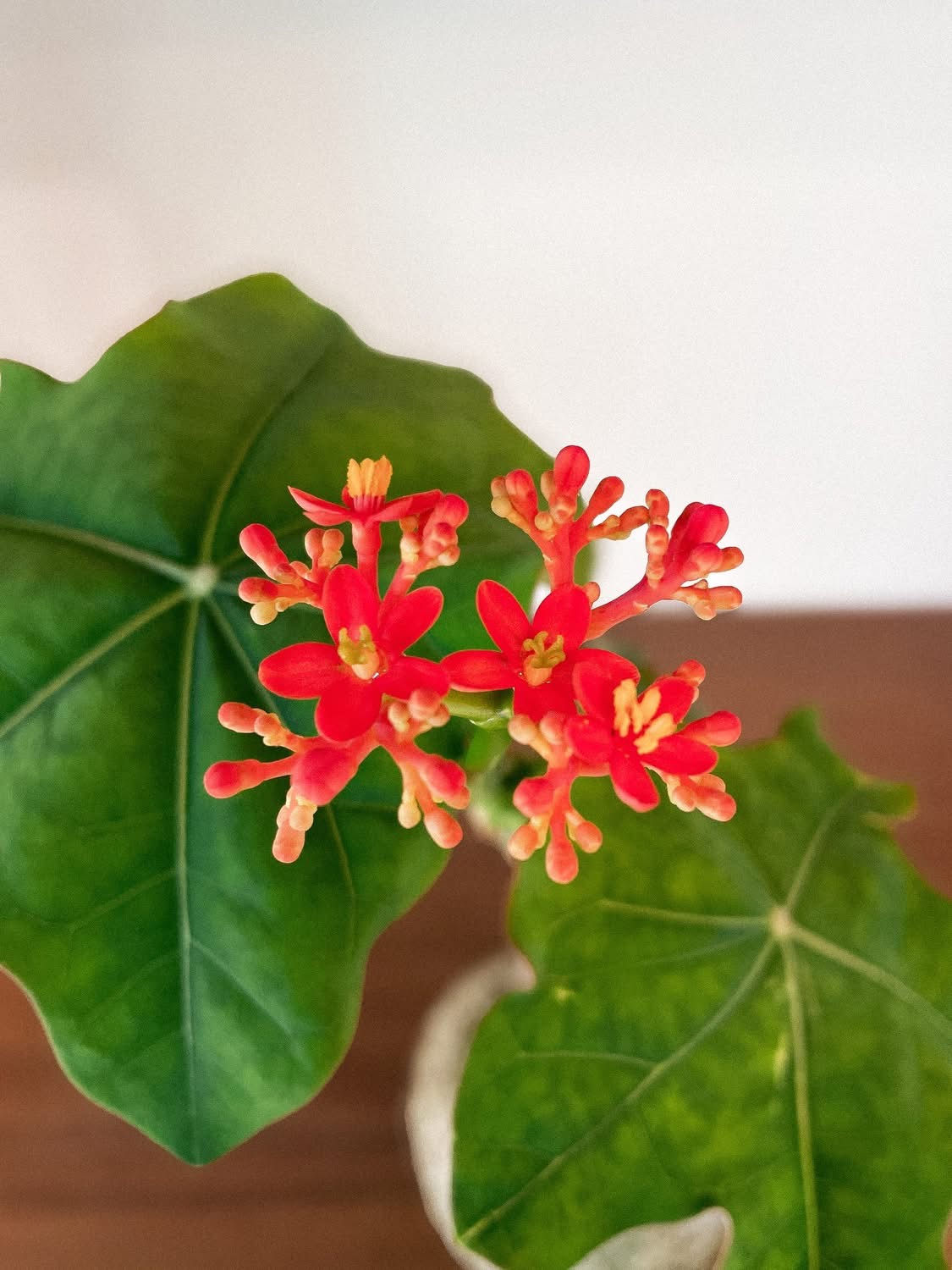

Jatropha podagrica, Buddha Belly Plant or Gout Plant 7652
🌿 The Buddha Belly Plant, scientifically known as Jatropha podagrica, is a member of the Euphorbiaceae family and originates from Central America and the Caribbean. This striking succulent gets its common names from its swollen, bottle-shaped stem that resembles a rounded belly. In its natural habitat, it grows as a small shrub in dry, rocky areas. This plant is suitable for intermediate growers who appreciate unusual forms and are comfortable with specific care requirements. Fun fact: the swollen stem isn't just decorative—it stores water to help the plant survive extended dry periods.
FOLIAGE AND GROWTH HABIT
Jatropha podagrica grows as a compact, upright succulent with a distinctive bulbous base. The leaves are large, lobed, and shield-shaped, reaching up to 18 centimetres across. They emerge in a deep green colour with a slightly leathery texture and prominent veins. The leaves grow in clusters at the top of the thick stem, creating an umbrella-like canopy. During dormancy, the plant may drop its leaves completely, which is a normal seasonal behaviour.
FLOWER DETAILS
The blooms appear in coral-red to bright orange clusters held above the foliage on long stalks. Each small flower has five petals and forms part of a rounded flower head that can last several weeks. The flowers have no noticeable fragrance but provide a stunning contrast against the green foliage. This plant can flower multiple times throughout the year, especially during warmer months. To encourage more frequent blooming, provide bright light, reduce watering slightly during cooler months to simulate a dry season, and feed with a low-nitrogen fertilizer during the growing period.
CARE INSTRUCTIONS
- 🌞 Light: Bright, direct sunlight for 6-8 hours daily. Thrives in full sun conditions, especially near south or west-facing windows.
- 💧 Water: Water deeply when soil is completely dry during spring and summer. Reduce watering significantly in fall and winter to once every 3-4 weeks. Allow soil to dry fully between waterings. Bottom watering works well.
- 🌡️ Humidity: Prefers low humidity, 30-40% is ideal. Tolerates typical dry indoor conditions well.
- 🪴 Soil: Well-draining cactus or succulent mix with added perlite or coarse sand. Soil must not retain moisture.
- 🏺 Potting: Use a clay or terracotta pot with drainage holes, sized just slightly larger than the root ball. Shallow but stable pots work best. Repot every 2-3 years in spring.
- 🌱 Growth rate: Slow growing. Expect 5-8 centimetres of height per year. Mature plants reach 60-90 centimetres tall indoors over several years.
- 👩🌾 Fertilizing: Feed monthly during spring and summer with diluted cactus fertilizer. Skip fertilizing entirely in fall and winter during dormancy.
- 🐾 Pet friendly: No. All parts of this plant are toxic to cats, dogs, and humans. The milky sap can cause skin irritation and stomach upset if ingested.
WHERE TO PUT IT
Place your Buddha Belly Plant in the brightest spot you have, such as a south-facing window sill, sunroom, or covered patio during warm months. It works well in minimalist spaces, desert-themed displays, or succulent collections where its unique form becomes a focal point. Avoid placing it in bathrooms, kitchens, or any high-humidity areas. Keep it away from reach of children and pets due to its toxicity. It's not suitable for low-light rooms, offices without windows, or spaces with cold drafts.
RARITY ASSESSMENT
sought-after
