
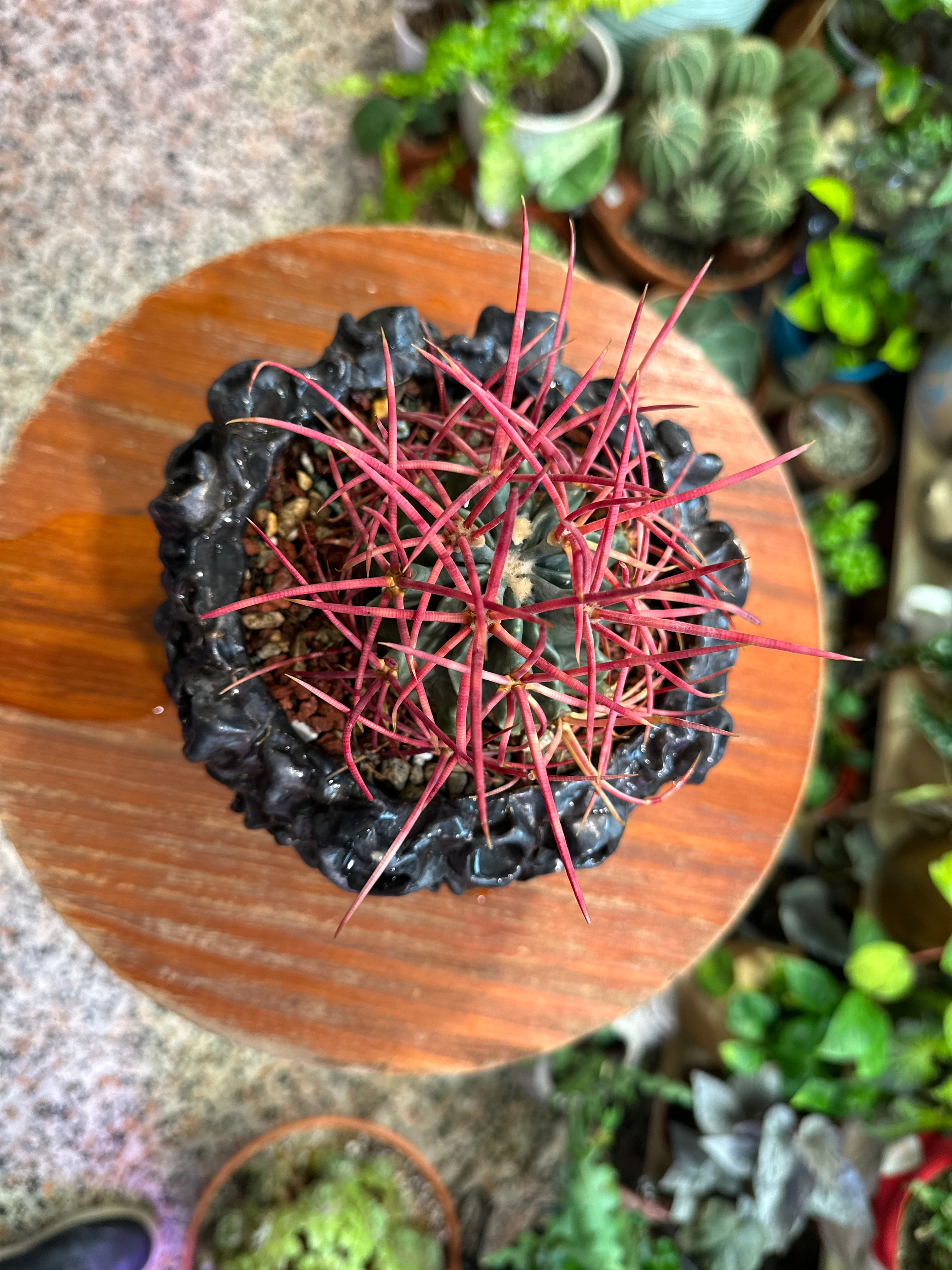

4.1. Echinocactus Olycephalus Cactus (Super Rare)
Echinocactus polycephalus is one of those cacti that almost does not look real.Clusters of heavily armed stems, dense silver-white spines, and an ancient desert survival form that took decades to perfect itself naturally.
This species grows in some of the harshest desert conditions in North America, where temperatures swing brutally between extreme heat and cold. Instead of growing fast and soft like many common cacti, it grows painfully slow — every mature cluster represents years, sometimes decades, of survival.
That slow growth is exactly why it is expensive.
Unlike mass-produced nursery cactus varieties, Echinocactus polycephalus is difficult to propagate, sensitive when young, and rarely produced in large quantities. Large established specimens are especially valuable because time itself becomes part of the plant. You are not just buying a cactus — you are buying years of growth that cannot be rushed.
Its spine structure is another reason collectors obsess over it. The intricate web of curved spines changes color with age and light, creating a metallic, almost glowing appearance under the sun. Every plant develops differently, making mature specimens highly individual and sculptural.
This is not a “cute beginner cactus.”It is a serious collector’s plant — raw, architectural, ancient, and wild.
Some plants are beautiful because they flower.Echinocactus polycephalus is beautiful because it survived.
)