
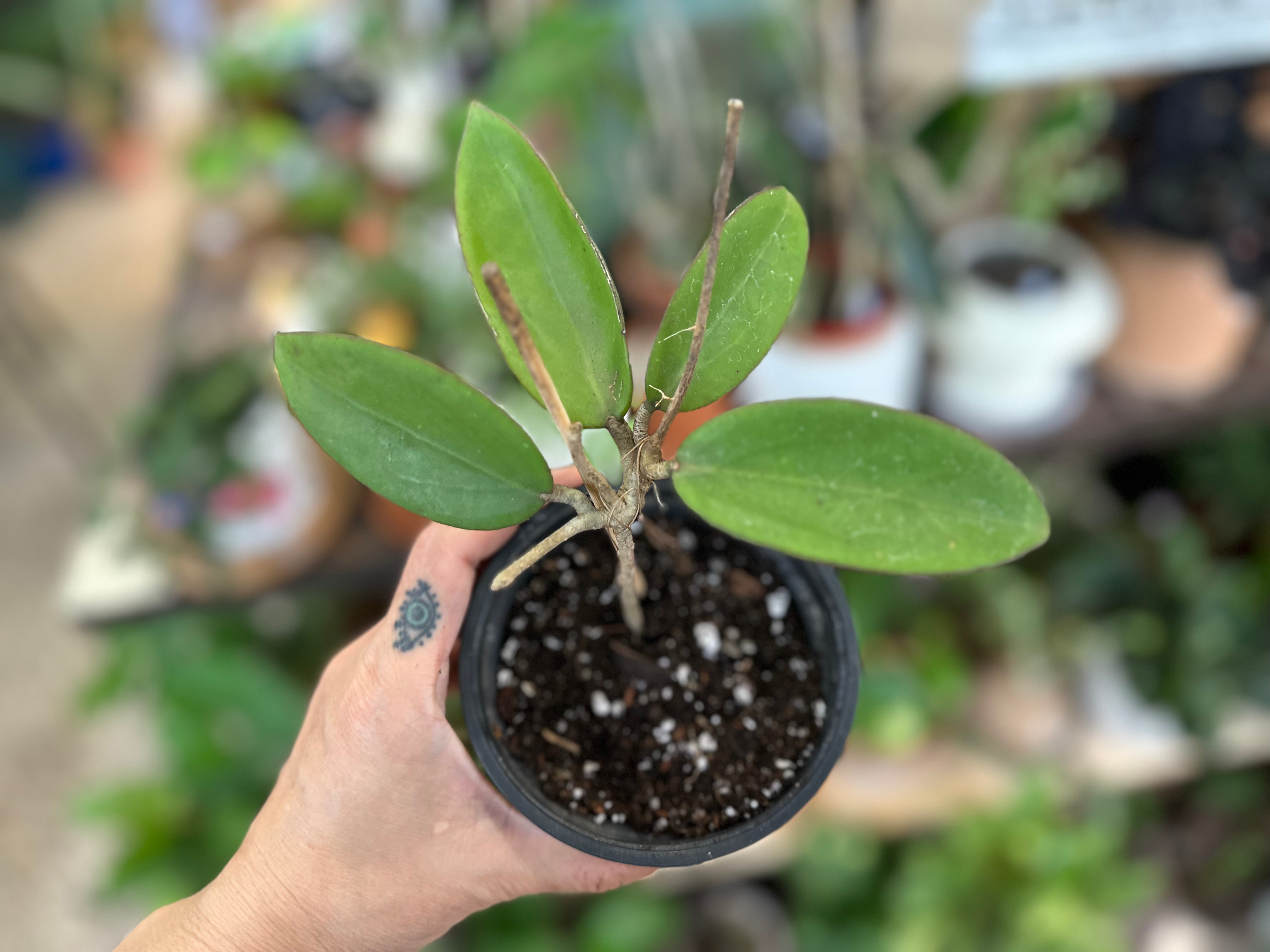

Hoya sp. Hai Phong 6107
🌿 The Hoya sp. Hai Phong 6107, often called the Hai Phong Hoya, is a distinctive member of the Apocynaceae family, a group known for waxy blooms and resilient foliage. Originally collected from the Hai Phong region of northern Vietnam, this species thrives in warm, humid forests where it climbs over tree bark and rocks. It's considered an intermediate-care plant, meaning you'll need some experience with tropical houseplants to keep it happy long-term. A fun fact about this hoya: its collector code (6107) refers to the specific expedition that first documented it, making each plant a living piece of botanical exploration history.
FOLIAGE AND GROWTH HABIT
This hoya displays a vining growth habit that naturally climbs or trails depending on how you support it. The leaves are thick and succulent-like, oval to lance-shaped, with a glossy, waxy surface that reflects light beautifully. Leaf colour ranges from deep green to slightly greyish-green, sometimes showing faint veining or subtle mottling. The texture is smooth and firm, giving the plant a sculptural quality that works well in modern or minimalist spaces.
FLOWER DETAILS
Flowers emerge in rounded clusters called umbels, typically showing soft pink to pale mauve petals with darker pink or red centres. Each bloom has the classic star shape common to hoyas, with a waxy texture and a sweet, honeyed fragrance that intensifies in the evening. The aesthetic appeal lies in the contrast between the glossy foliage and the delicate, almost porcelain-like flowers. Blooming frequency varies, but mature plants often flower once or twice yearly, usually in spring or summer. To encourage flowering, provide bright indirect light, allow the plant to become slightly root-bound, and avoid moving it once buds appear, as hoyas are sensitive to environmental changes during bloom development.
CARE INSTRUCTIONS
- 🌞 Light: Bright indirect light is ideal. Aim for 6-8 hours daily. Too much direct sun can scorch leaves, while low light reduces flowering.
- 💧 Water: Water thoroughly when the top half of soil feels dry, usually every 7-10 days in summer and every 14-21 days in winter. Bottom watering works well to avoid wetting leaves and encourage strong root growth.
- 🌡️ Humidity: Prefers 50-70% humidity. Tolerates average home levels but may grow slower and flower less frequently below 40%.
- 🪴 Soil: Use a chunky, well-draining mix with bark, perlite, and peat or coco coir. Avoid dense potting soil that stays wet.
- 🏺 Potting: Choose a pot with drainage holes, sized just slightly larger than the root ball. Plastic or terracotta both work. Repot every 2-3 years only when roots fill the container, as hoyas bloom better when root-bound.
- 🌱 Growth rate: Moderate. Expect 10-20 cm of new vine length over six months under good conditions. After one year, you might see 30-40 cm of growth. Mature vines can reach 1.5-2 metres if allowed to climb.
- 👩🌾 Fertilizing: Feed monthly during spring and summer with a balanced liquid fertilizer diluted to half strength. A bloom-boosting formula higher in phosphorus can encourage flowering. Skip fertilizer in autumn and winter.
- 🐾 Pet friendly: Generally considered non-toxic to cats and dogs, though the milky sap may cause mild stomach upset if ingested in large quantities. The sap can also cause skin irritation in sensitive individuals, so handle with care during pruning.
WHERE TO PUT IT
Place this hoya near an east or west-facing window where it receives bright, filtered morning or afternoon light. It looks striking on a shelf with space to trail down, or trained up a small trellis for a vertical display. Living rooms, home offices, and bedrooms with good natural light all work well. Bathrooms with windows can be ideal if humidity is naturally higher. Avoid placing it in dark corners, near heating vents, or in cold drafts from doors or windows, as inconsistent temperatures and low light will stunt growth and prevent flowering.
sought-after
