
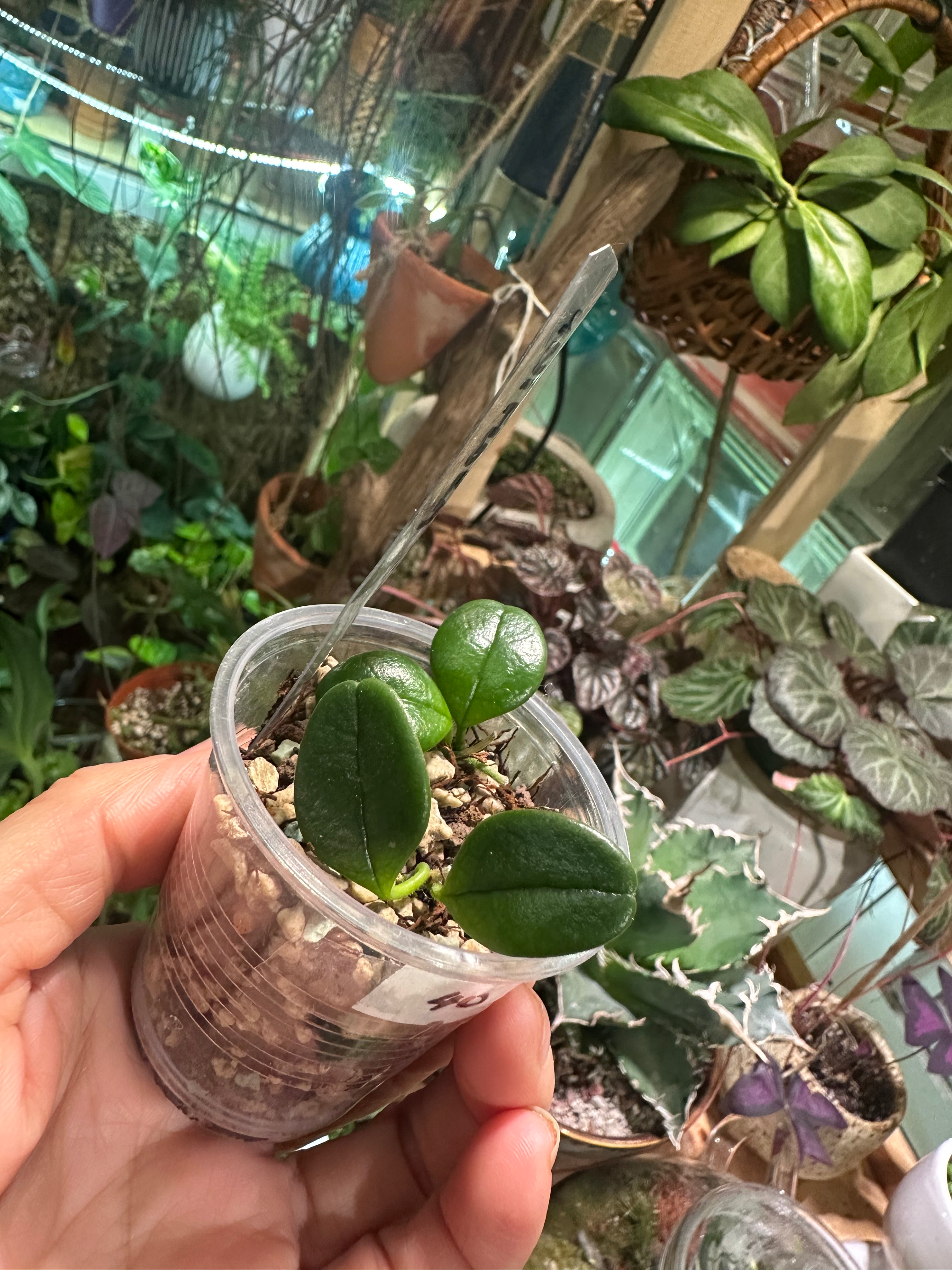
Hoya Uniflora 6467
🌿 Hoya uniflora is an extraordinary miniature epiphytic and lithophytic wax plant in the Apocynaceae family, native to the remote tropical limestone karst mountains of Xiangkhouang Province in northeastern Laos. In its wild habitat, it creeps across mossy limestone rocks and the lower bark of dwarf trees in high-humidity mountain forests. It is an intermediate-to-collector level botanical houseplant admired for its tiny succulent foliage and singularly dramatic solitary blossoms.
FUN FACT
Hoya uniflora was described as a species new to science from Laos.
FOLIAGE AND GROWTH HABIT
Hoya uniflora exhibits a charming creeping, prostrate, and gently trailing growth habit that forms a tidy, low mat of botanical greenery. Its leaves are miniature, thick, succulent, and elliptical to obovate, measuring only 1.5 to 2.5 centimetres in length and about 1 centimetre in width. The foliage is a rich, matte olive green with smooth margins and subtle fine texture that enables it to conserve moisture during dry spells in its limestone habitat. The slender, wiry stems produce delicate adventitious rootlets at the nodes, allowing it to carpet small pots, mount onto cork bark slabs, or cascade gracefully from miniature hanging containers.
FLOWER DETAILS
The flowering habit of Hoya uniflora is a genuine botanical marvel. Unlike virtually all other members of the genus that produce spherical or flat umbels of dozens of blooms, this species bears solitary, single flowers directly from the leaf nodes. Relative to the plant's tiny leaves, the individual blossoms are astonishingly large, measuring approximately 1.5 to 2 centimetres across. The corolla is pure crystalline white, waxy, and star-shaped with acute lobes, centered with an exquisite white-and-yellow corona. The blossoms emit a delicate, sweet perfume in the evening. As with all Hoyas, preserve the flowering spurs to ensure future bloom production.
CARE INSTRUCTIONS
- 🌞 Light: Requires bright, filtered indirect sunlight for 6 to 8 hours daily. An east-facing exposure is ideal. Shield from intense midday direct sun, which can overheat the miniature succulent leaf blades.
- 💧 Water: Allow the top half to two-thirds of the substrate to dry out between waterings. Use the soak-and-dry method with lukewarm water, ensuring rapid drainage. Reduce watering frequency substantially during winter dormancy.
- 🌡️ Humidity: Highly prefers elevated humidity between 60% and 80%, replicating its misty mountain habitat. In dry Canadian winter homes, grow it inside a glass terrarium, cabinet greenhouse, or beside an active humidifier.
- 🪴 Soil: Requires an open, fast-draining mineral-rich epiphytic substrate. Combine fine orchid bark, pumice, perlite, crushed limestone or coarse horticultural grit, and a touch of peat moss for optimal root aeration.
- 🏺 Potting: Best cultivated in small, shallow terracotta or plastic pots (6 to 9 centimetres) with generous drainage, or mounted onto a natural cork bark plaque with sphagnum moss. Keep roots comfortably snug.
- 🌱 Growth rate: Slow to moderate grower that takes time to establish before branching freely into a compact, multi-stemmed creeping specimen.
- 👩🌾 Fertilizing: Feed monthly during spring and summer with a gentle, balanced orchid or tropical foliage fertilizer diluted to one-quarter strength. Withhold fertilizer throughout late autumn and winter.
WHERE TO PUT IT
Due to its miniature size and specific humidity preference, Hoya uniflora is ideally suited for indoor glass cloches, plant display cabinets, well-ventilated terrariums, or bright windowsill shelves facing east. Avoid drafty entryways, cold windowsill drafts where temperatures drop below 16°C, and dry airflow directly in front of central heating vents that can cause bud blast or leaf desiccation.
