
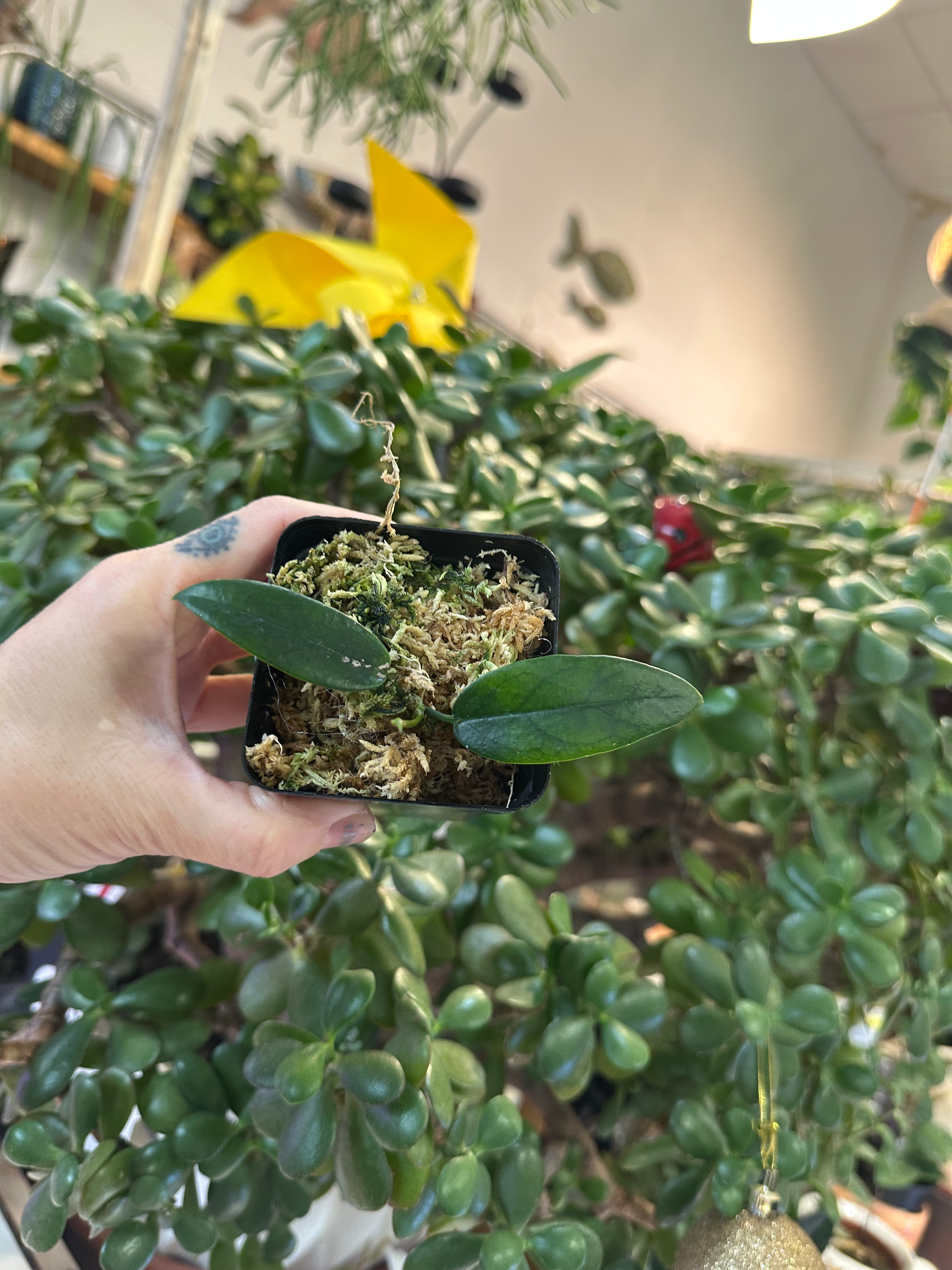

5.M. Hoya Macgillivrayi Red
🌿 The Hoya macgillivrayi is a stunning tropical climber that comes from the rainforests of Queensland, Australia. This species belongs to the Apocynaceae family and is known for producing some of the largest flowers in the entire Hoya genus. In its natural habitat, it grows as an epiphyte, clinging to tree trunks and branches where it receives dappled light through the canopy. This plant is best suited for intermediate to advanced growers who appreciate its specific care requirements and slower growth pace. Here's something interesting: individual flowers can reach up to 9 centimetres across, making them true showstoppers when they finally appear.
FOLIAGE AND GROWTH HABIT
This Hoya has a climbing growth habit and will happily attach itself to a moss pole or trellis when given the chance. The leaves are large, thick, and leathery with a deep green colour that sometimes shows subtle veining. Each leaf has a slightly glossy surface and a rigid texture that feels substantial to the touch. The foliage alone makes this plant worth growing, even during the years between flowering cycles.
FLOWER DETAILS
The flowers are the true glory of Hoya macgillivrayi. They appear in clusters and range from deep burgundy to rich wine red with a waxy texture that looks almost artificial. Each bloom has a complex star shape with a contrasting centre. The fragrance is strong and sweet, especially noticeable during evening hours. These flowers have an exotic, almost tropical fruit-like appearance that draws attention from across the room. Flowering happens infrequently, sometimes only once every few years, and patience is essential. To encourage blooming, provide bright indirect light year-round, maintain consistent care without major environmental changes, and avoid moving the plant once flower buds begin forming.
CARE INSTRUCTIONS
- 🌞 Light: Bright indirect light is essential. It tolerates some morning sun but needs protection from harsh afternoon rays. Aim for 6-8 hours of filtered light daily.
- 💧 Water: Water thoroughly when the top half of the soil feels dry, roughly every 10-14 days in summer and every 2-3 weeks in winter. Bottom watering works well to ensure even moisture without disturbing the roots.
- 🌡️ Humidity: Prefers 60-80% humidity. Will tolerate average home humidity (40-50%) but grows more vigorously with higher levels.
- 🪴 Soil: Use a chunky, well-draining mix with orchid bark, perlite, and peat or coco coir. Aeration is critical to prevent root rot.
- 🏺 Potting: Plant in a pot with drainage holes, preferably terracotta or plastic. Size should be snug, only 2-3 cm larger than the root ball. Repot every 2-3 years only when roots are crowded.
- 🌱 Growth rate: Slow growing. Expect 2-4 new leaves over 6 months under ideal conditions. After one year, growth may total 15-30 cm. Mature vines can eventually reach 2-3 metres indoors.
- 👩🌾 Fertilizing: Feed monthly from spring through early autumn with a balanced liquid fertilizer diluted to half strength. Skip fertilizing in winter when growth slows.
- 🐾 Pet friendly: No. Hoya macgillivrayi is toxic to cats and dogs. The sap can cause mild stomach upset, drooling, and vomiting if ingested.
WHERE TO PUT IT
This plant does best near an east or west-facing window where it receives bright, filtered morning or late afternoon light. A bathroom with good natural light is ideal because of the elevated humidity. You can also grow it in a living room or bedroom with supplemental humidity from a humidifier or pebble tray. Avoid placing it in low-light corners, directly in front of south-facing windows during summer, or near heating vents and air conditioners that create dry air and temperature fluctuations.
