
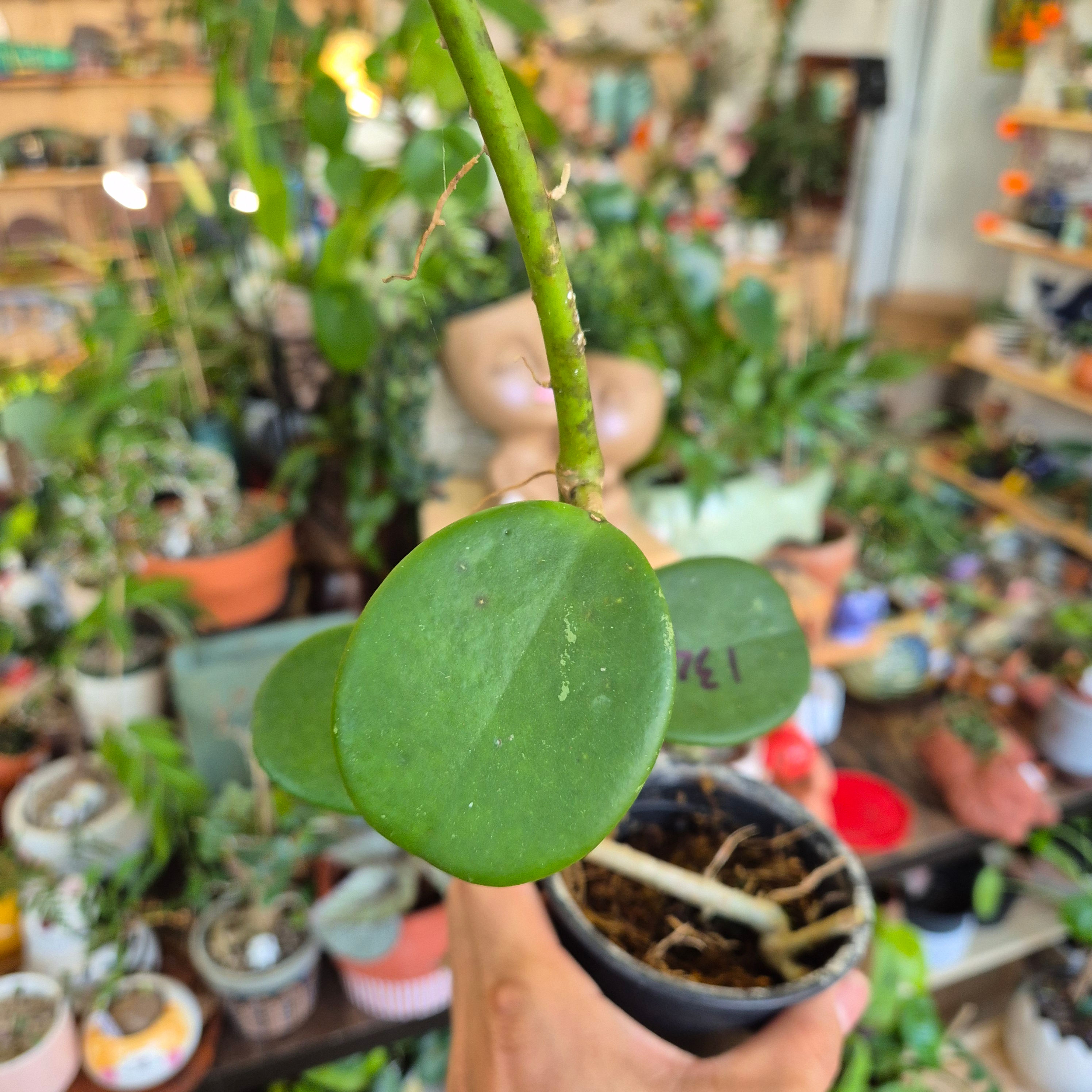

Hoya Obovata 6702
🌿 Hoya obovata, commonly known as the Wax Plant, belongs to the Apocynaceae family and hails from the tropical regions of Indonesia and Thailand. In its natural habitat, this evergreen perennial climbs along tree trunks in humid forests, thriving under the dappled canopy. It's a great choice for beginner to intermediate plant enthusiasts who want something forgiving yet rewarding. Fun fact: the waxy coating on its leaves helps it retain moisture during dry spells, making it surprisingly drought-tolerant for a tropical plant.
FOLIAGE AND GROWTH HABIT
This hoya has a vining growth habit that can trail gracefully from a hanging basket or climb a small trellis with support. The leaves are thick, nearly round to oval-shaped, and grow in pairs along the stems. They're a rich green colour with subtle silver splashes that catch the light beautifully. The texture is smooth and waxy to the touch, giving them a polished, almost succulent-like appearance.
FLOWER DETAILS
Hoya obovata produces stunning clusters of star-shaped flowers that range from pale pink to white, often with a darker pink or red center. Each bloom is delicately fuzzy and gives off a sweet, honeyed fragrance that intensifies in the evening. The clusters hang down like little chandeliers and are absolutely captivating when backlit. It typically flowers in spring and summer, though mature plants in ideal conditions may bloom more than once a year. To encourage flowering, provide bright indirect light, allow the plant to become slightly root-bound, and maintain consistent care without overwatering. Flowers can last several weeks and the plant reuses the same flowering spurs, so never remove them after blooms fade.
CARE INSTRUCTIONS
- 🌞 Light: Bright indirect light is ideal, though it tolerates some direct morning sun. Aim for 6-8 hours of filtered light daily to promote healthy growth and flowering.
- 💧 Water: Water thoroughly when the top half of the soil feels dry, roughly every 1-2 weeks in summer and every 2-3 weeks in winter. Bottom watering works well to prevent moisture on the leaves and stems.
- 🌡️ Humidity: Prefers 40-60% humidity but adapts to average home conditions without issue.
- 🪴 Soil: Use a chunky, well-draining mix such as orchid bark, perlite, and peat or coco coir in equal parts.
- 🏺 Potting: Choose a pot with drainage holes, preferably terracotta or plastic, sized just slightly larger than the root ball. Repot every 2-3 years or when roots emerge from drainage holes.
- 🌱 Growth rate: Moderate growth, adding several inches of vine length in 6 months under good conditions. Over a year, it can produce 1-2 feet of new growth. Mature vines can reach 10-15 feet if allowed to climb.
- 👩🌾 Fertilizing: Feed monthly during spring and summer with a balanced liquid fertilizer diluted to half strength. Skip fertilizing in fall and winter.
- 🐾 Pet friendly: No. Hoya obovata is mildly toxic to cats and dogs. Ingestion may cause vomiting, drooling, or gastrointestinal upset due to the presence of saponins in the sap.
WHERE TO PUT IT
Hoya obovata thrives in bright living rooms, sunrooms, or east-facing bedrooms where it can receive gentle morning light. It's also wonderful in bathrooms with windows, where the ambient humidity helps it flourish. Place it on a high shelf or in a hanging planter to showcase its trailing vines. Avoid placing it in dark corners, windowless rooms, or directly in front of heating vents, as these conditions can stress the plant and inhibit flowering.
