
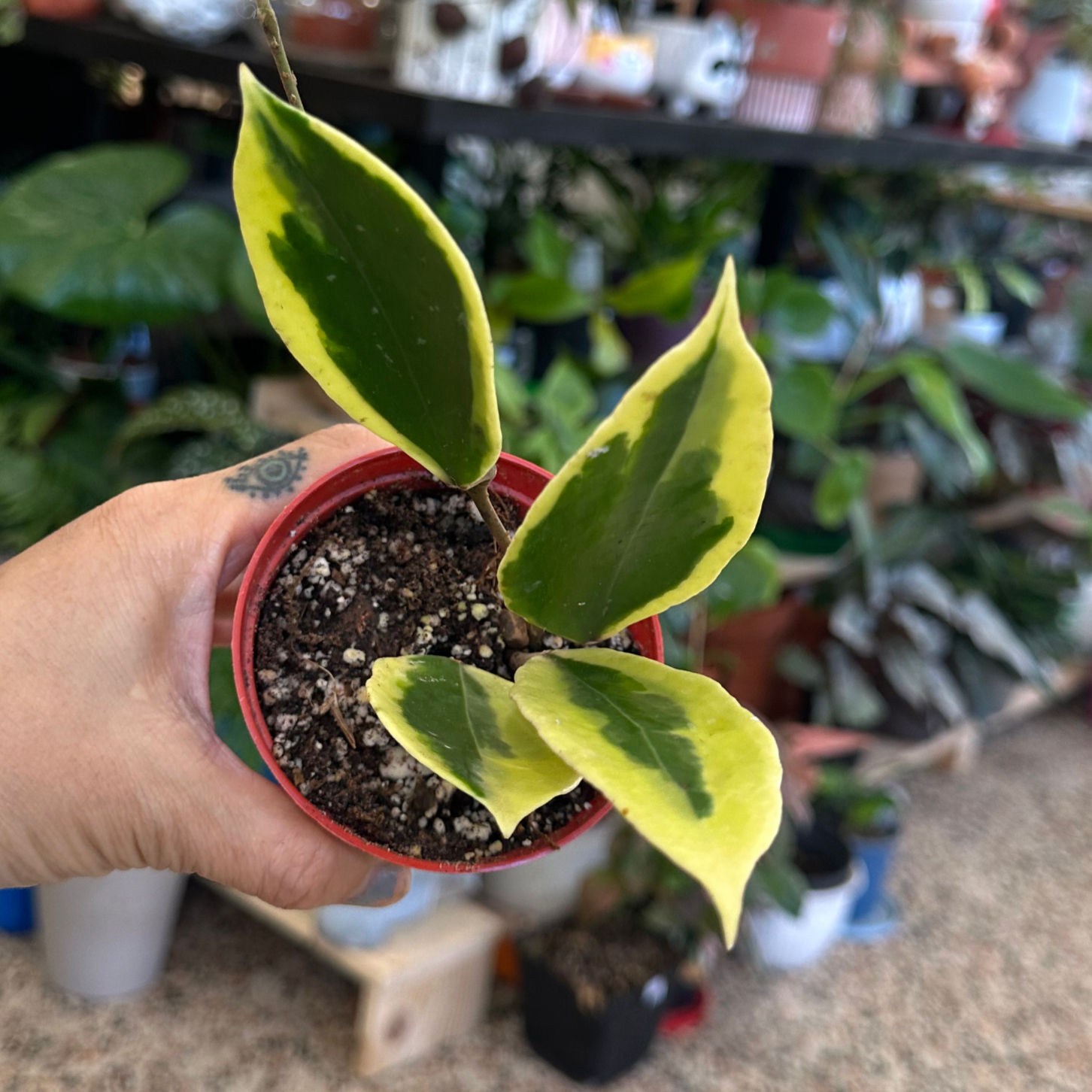

Hoya sp. 'Quang Ngai Albo'
🌿 Hoya sp. aff. burtoniae 'Quang Ngai Albo' is a stunning variegated climbing plant from the Apocynaceae family, believed to originate from Vietnam's Quang Ngai province. This species shows close affinity to Hoya burtoniae but retains distinct characteristics that set it apart. The albo variegation creates dramatic white and cream splashes across dark green foliage, making each leaf unique. As a climbing hoya, it naturally seeks support and will reward you with cascading growth when given something to grip. This is an intermediate-level plant that needs attention to light and humidity but isn't overly fussy once you understand its rhythm. Here's something interesting: like many hoyas, this plant can live for decades and often flowers more abundantly as it matures and becomes root-bound.
FOLIAGE AND GROWTH HABIT
This hoya displays a vining growth habit with stems that actively search for support structures to climb. The leaves are lance-shaped to oval, moderately thick, and succulent in texture, typical of the hoya genus. What makes this cultivar special is its variegation pattern—leaves show irregular splashes and sectors of white, cream, and pale green against a deep green background. Some leaves may be nearly all white while others show just a hint of variegation. The foliage has a slightly waxy surface that catches light beautifully, and new growth often emerges with pink or bronze tones before settling into its mature colouring.
FLOWER DETAILS
The flowers appear in rounded umbels and are small, star-shaped blooms with a waxy texture characteristic of hoyas. Expect clusters of pale pink to white flowers with darker pink or red centres, each bloom measuring about half a centimetre across. The fragrance is sweet and honey-like, most noticeable in the evening and early morning hours. The aesthetic appeal is delicate and charming rather than bold, with the fuzzy-looking clusters creating an almost crystalline appearance. Flowering isn't constant—it typically happens once or twice yearly when the plant is mature and happy. To encourage blooms, maintain consistent care, avoid moving the plant frequently, don't remove old flower spurs (peduncles), provide adequate light, and let the plant become slightly root-bound. Stress from slight underwatering can also trigger flowering once the plant is established.
CARE INSTRUCTIONS
- 🌞 Light: Bright indirect light is ideal, with some morning sun tolerated. Needs 4-6 hours of quality light daily. Too much direct sun will scorch the white sections, but insufficient light reduces variegation and slows growth.
- 💧 Water: Allow the top half of soil to dry between waterings. In spring and summer, water when the leaves show slight softness—about every 7-10 days. In autumn and winter, reduce to every 10-14 days. Bottom watering works well to avoid leaf spotting and ensure even moisture distribution.
- 🌡️ Humidity: Prefers 50-70% humidity. Will tolerate average home humidity around 40% but grows more vigorously and produces healthier leaves in higher humidity. Brown leaf tips often signal the air is too dry.
- 🪴 Soil: Needs a chunky, well-draining mix. Combine orchid bark, perlite, and peat or coco coir in equal parts. The mix should never stay soggy—roots need air circulation to prevent rot.
- 🏺 Potting: Use pots with drainage holes, preferably terracotta or unglazed ceramic that breathes. Keep pot size modest—hoyas prefer being slightly cramped. Repot every 2-3 years or when roots circle densely. Often flowers better when root-bound.
- 🌱 Growth rate: Moderate to slow. Expect 10-20 cm of new growth in 6 months under good conditions. Over a year, a well-cared-for plant might add 30-40 cm. Maximum vine length can reach several metres given time and support, though it can be pruned to maintain desired size.
- 👩🌾 Fertilizing: Feed monthly during spring and summer with a balanced liquid fertilizer diluted to half strength. Some growers use orchid fertilizer successfully. Stop or reduce to every 6-8 weeks in autumn and winter when growth slows.
- 🐾 Pet friendly: No. Hoyas contain compounds that can cause mild gastrointestinal upset if ingested by cats or dogs. While not highly toxic, it's best kept out of reach. The milky sap may also cause skin irritation in sensitive individuals.
WHERE TO PUT IT
This hoya thrives in bright rooms with eastern or northern exposure windows where it receives gentle morning light or consistent indirect brightness throughout the day. It's perfect for hanging near a window, trained up a small trellis on a shelf, or displayed in a bathroom with good natural light where it can benefit from shower humidity. Living rooms, home offices, and bedrooms with adequate light all work well. Avoid placing it in dark corners, directly against hot south or west-facing windows in summer, or near heating vents that blast dry air. Keep it away from cold drafts in winter and don't put it somewhere you'll constantly bump into or disturb it, as hoyas dislike being moved around once settled.
