
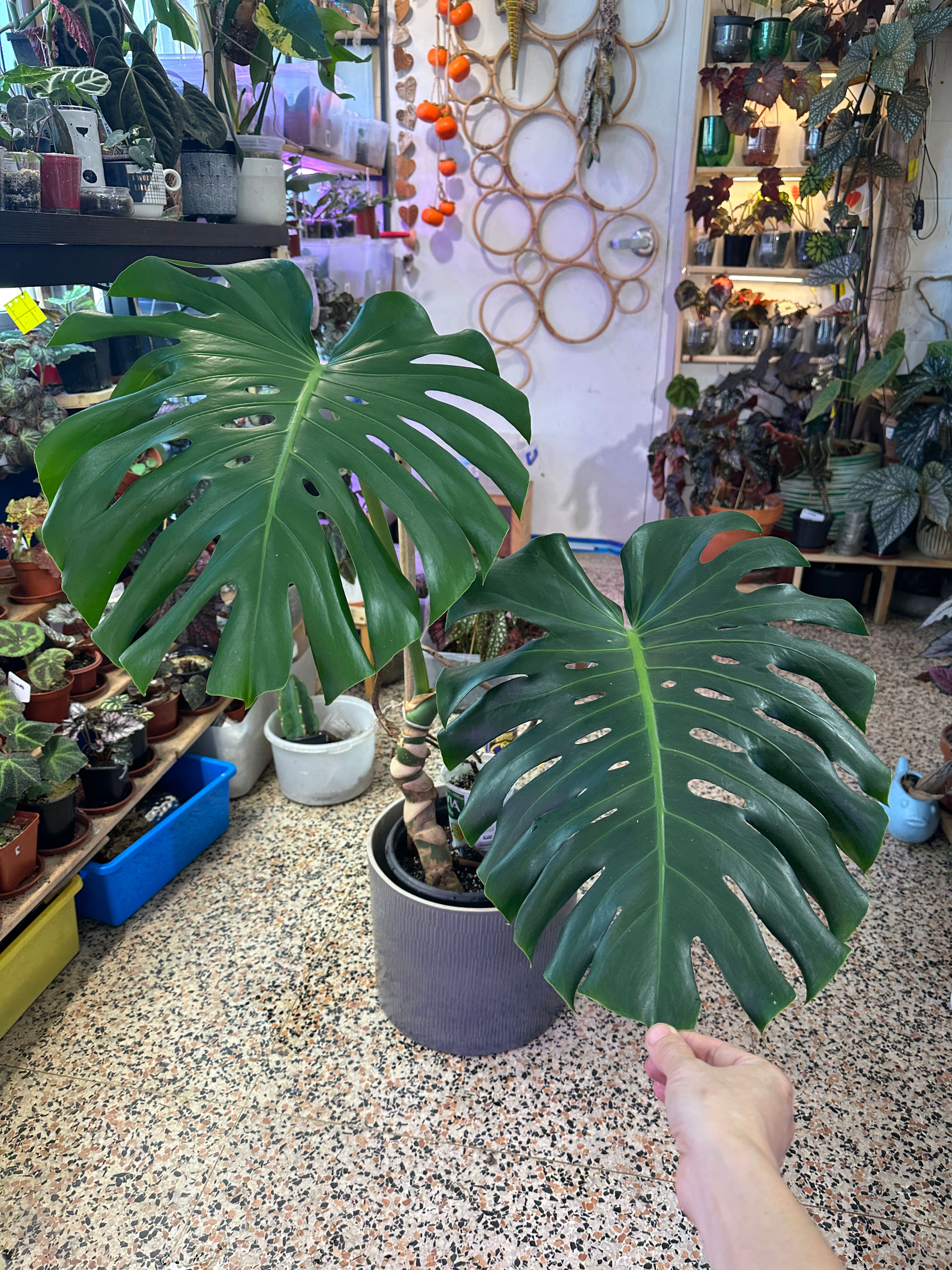

Monstera Green 8250
🌿 The Monstera deliciosa, commonly known as the Swiss Cheese Plant, is a tropical flowering plant in the Araceae family. Native to the rainforests of southern Mexico and Central America, this iconic houseplant is recognized for its large, naturally perforated leaves that develop dramatic splits as the plant matures. In its natural habitat, Monstera deliciosa grows as an epiphytic climber, using aerial roots to scale trees and reach the forest canopy. This is a beginner-friendly plant that adapts well to typical indoor conditions. Fun fact: in the wild, mature Monstera deliciosa produces an edible fruit that tastes like a combination of pineapple and banana, which is how it earned its species name meaning 'delicious monster.'
FOLIAGE AND GROWTH HABIT
Monstera deliciosa has a climbing growth habit, though it can be trained to grow upright with proper support. The leaves are heart-shaped when young, maturing into large, glossy, deep green foliage that can reach up to 90 centimeters across in ideal conditions. The signature fenestrations (natural holes and splits) develop as the plant matures, creating a striking architectural appearance. The leaves have a leathery, waxy texture that gives them a lustrous sheen. New leaves emerge tightly rolled and unfurl over several days, often appearing solid before developing their characteristic splits.
FLOWER DETAILS
Monstera deliciosa produces creamy white spathe flowers that resemble a calla lily, though flowering is rare in indoor settings. The flower consists of a thick, cone-shaped spadix surrounded by a boat-shaped spathe that opens to reveal the bloom. The flowers have a subtle, sweet fragrance and are followed by the development of the edible fruit, though this typically only occurs in mature plants grown outdoors or in greenhouse conditions. Indoor specimens rarely flower, but maintaining consistent warmth, high humidity, and bright indirect light increases the possibility. Flowering typically occurs in late spring or summer when conditions mimic the plant's natural tropical environment.
CARE INSTRUCTIONS
- 🌞 Light: Bright indirect light is ideal, though it tolerates medium light. Needs 6-8 hours of filtered sunlight daily. Avoid direct sun which can scorch the leaves.
- 💧 Water: Water thoroughly when the top 5-7 centimeters of soil feels dry. In spring and summer, this means watering roughly once a week. Reduce to every 10-14 days in fall and winter. Bottom watering or top watering both work well.
- 🌡️ Humidity: Thrives in 60-80% humidity but tolerates average home humidity of 40-50%. Higher humidity encourages larger leaf development.
- 🪴 Soil: Well-draining, chunky mix with peat moss, perlite, and orchid bark. Soil should retain some moisture but never stay waterlogged.
- 🏺 Potting: Use a pot with drainage holes, 5-7 centimeters larger than the root ball. Terracotta or plastic both work. Repot every 18-24 months or when roots emerge from drainage holes.
- 🌱 Growth rate: Moderate to fast. Produces 1-2 new leaves per month in growing season. Can grow 30-60 centimeters per year. Indoors, typically reaches 1.5-2.5 meters tall, though can grow larger with a moss pole or support.
- 👩🌾 Fertilizing: Feed monthly during spring and summer with a balanced liquid fertilizer diluted to half strength. Pause feeding in fall and winter.
- 🐾 Pet friendly: No. Monstera deliciosa is toxic to cats and dogs. Contains calcium oxalate crystals that cause oral irritation, drooling, vomiting, and difficulty swallowing if ingested.
WHERE TO PUT IT
Monstera deliciosa works beautifully in living rooms, home offices, or bedrooms where it can serve as a statement piece. Place it near an east or west-facing window with sheer curtains, or a few feet back from a south-facing window. It needs space to spread, so corner placements work well. The plant also does nicely in bright bathrooms where the humidity is naturally higher. Avoid placing it in dark hallways, windowless rooms, or directly beside heating vents or air conditioners. Keep it away from cold drafts near exterior doors during winter months. The large leaves collect dust, so choose a spot where you can easily wipe them down monthly.
