
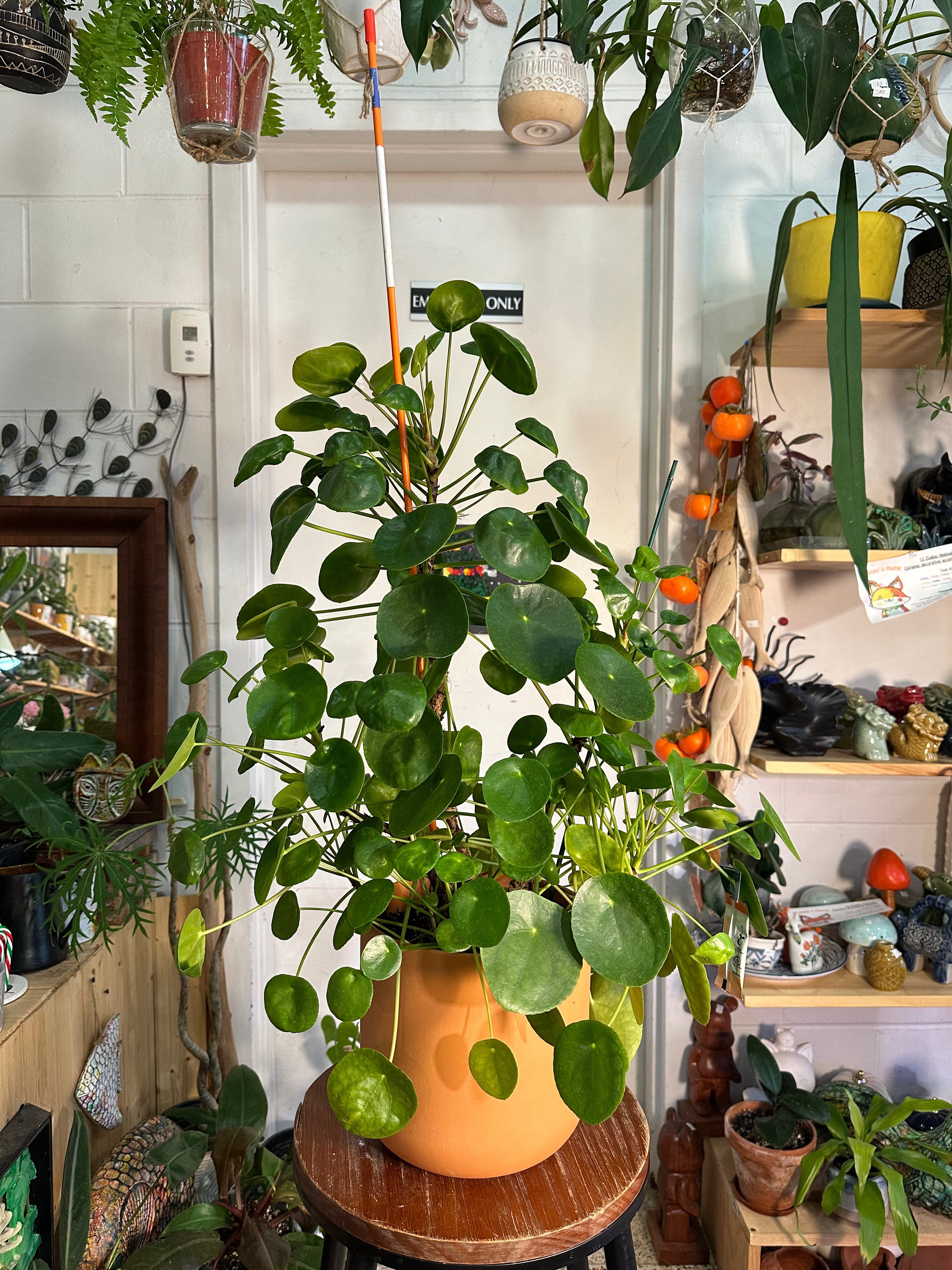

Pilea peperomioides (Chinese Money Plant)
🌿 The Chinese Money Plant, scientifically known as Pilea peperomioides, belongs to the Urticaceae family and hails from the Yunnan Province in southern China. This charming houseplant earned its common name from folklore suggesting it brings prosperity and good fortune to its owner. With round, coin-shaped leaves perched on delicate stems, it's become a social media sensation and a favourite among plant collectors worldwide. Perfect for beginners, this easy-going beauty adapts well to most home environments and rewards minimal effort with steady growth and plenty of personality. Fun fact: this plant was nearly unknown outside China until the 1980s, when a Norwegian missionary brought cuttings back to Europe, where it spread through generous sharing among plant lovers.
FOLIAGE AND GROWTH HABIT
Pilea peperomioides grows in an upright, bushy form with a central stem that supports a crown of distinctive pancake-shaped leaves. Each leaf is perfectly round, about 10 centimeters across, with a glossy, bright green surface that catches the light beautifully. The leaves attach to long, thin petioles that radiate outward, creating an almost umbrella-like canopy. The texture is smooth and slightly succulent to the touch, with a fresh, vibrant appearance that stays attractive year-round. As the plant matures, it develops a tree-like shape with older leaves gradually dropping from the lower stem, leaving characteristic leaf scars that add character to the plant's trunk.
FLOWER DETAILS
While primarily grown for its striking foliage, the Chinese Money Plant can produce small, inconspicuous flowers when mature and happy. The tiny blooms appear on pink-tinged stems in clusters, resembling delicate white or pale pink spikes. They don't carry fragrance and honestly aren't the main attraction, but they signal that your plant is thriving. Flowering typically occurs in spring or early summer when conditions are ideal. The aesthetic appeal is subtle rather than showy, with the flowers adding a gentle textural element without competing with the star attraction—those gorgeous coin leaves. To encourage flowering, maintain consistent care throughout winter, provide adequate light, and allow the plant to experience a slight temperature drop during cooler months, which mimics its natural growing cycle.
CARE INSTRUCTIONS
- 🌞 Light: Bright, indirect light for 6-8 hours daily. Tolerates some direct morning sun but avoid harsh afternoon rays that can scorch leaves. Will survive in medium light but grows slower.
- 💧 Water: Water when top 2-3 centimeters of soil dry out, typically every 7-10 days in summer, every 2 weeks in winter. Reduce watering during dormant months. Bottom watering works brilliantly to prevent water sitting on leaves and stem.
- 🌡️ Humidity: Thrives in average home humidity of 40-60%. Not fussy about humidity levels, making it wonderfully adaptable to typical Canadian indoor conditions.
- 🪴 Soil: Well-draining, lightweight potting mix. A blend of standard houseplant soil with added perlite or sand works perfectly. Needs good aeration around roots.
- 🏺 Potting: Use a pot with drainage holes, 15-20 centimeters diameter for mature plants. Terra cotta or ceramic pots work well. Repot every 1-2 years in spring when roots fill the container or when you notice slower growth.
- 🌱 Growth rate: Moderate to fast grower. Expect several new leaves per month during growing season. Can reach 30 centimeters tall and wide within a year under good conditions. Maximum size typically 40 centimeters in height and spread.
- 👩🌾 Fertilizing: Feed monthly from spring through early fall with balanced liquid fertilizer diluted to half strength. Skip fertilizing in winter when growth naturally slows.
- 🐾 Pet friendly: Yes! Non-toxic to cats and dogs, making it a safe choice for homes with curious pets who might nibble on plants.
WHERE TO PUT IT
The Chinese Money Plant looks stunning on a shelf, side table, or plant stand where its round leaves can be appreciated from all angles. It thrives in living rooms, bedrooms, home offices, or bright kitchens—anywhere with good natural light but away from direct sun. Its compact size makes it ideal for small spaces like apartments and condos. The upright growth habit means it doesn't need much horizontal space, though it appreciates room to spread its leaves. Rotate the plant weekly to encourage even growth all around. Avoid placing it near heating vents, air conditioners, or drafty windows, as temperature fluctuations stress the plant. Keep away from dark corners or rooms without windows, as insufficient light causes leggy growth and pale leaves that lose their vibrant colour.
)