
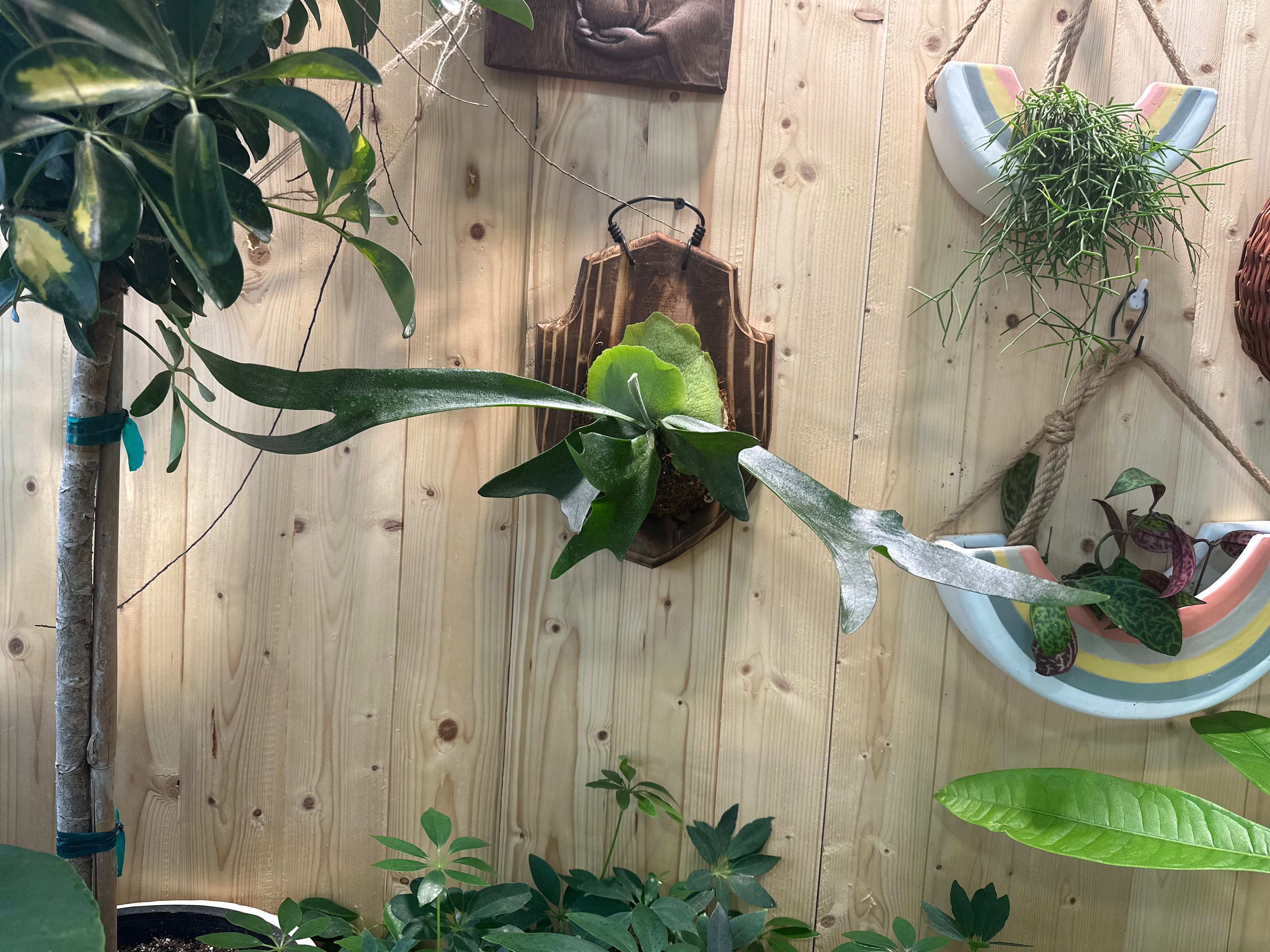

3.2. Platycerium Bifurcatum
The Staghorn Fern, scientifically known as Platycerium bifurcatum, is an epiphytic fern belonging to the Polypodiaceae family. Native to the tropical and subtropical regions of Australia, New Guinea, and Indonesia, this distinctive fern grows naturally on tree trunks and branches in humid forest environments. In its natural habitat, it clings to host trees without harming them, absorbing moisture and nutrients from the air and rain. This is a beginner-friendly plant that adapts well to indoor conditions with minimal fuss. Here's a fun fact: the Staghorn Fern gets its common name from its fronds, which resemble the antlers of a stag or elk, and it was a prized specimen in Victorian-era conservatories. 🌿
FOLIAGE AND GROWTH HABIT
Staghorn Ferns have a unique growth habit featuring two distinct types of fronds. The sterile basal fronds are round, flat, and shield-like, growing tightly against the mounting surface to anchor the plant and collect organic debris for nutrients. The fertile fronds are the dramatic, antler-shaped leaves that arch outward and can reach lengths of up to two feet. These fronds are grey-green in colour with a soft, velvety texture created by fine white hairs that help the plant retain moisture. As the plant matures, it develops a layered, sculptural appearance that makes it a living piece of art.
FLOWER DETAILS
Staghorn Ferns do not produce traditional flowers. Instead, they reproduce through spores that develop on the undersides of the fertile fronds in brownish patches. These spore patches appear as fuzzy, rust-coloured areas and are often mistaken for disease by new owners, but they're completely normal and indicate a healthy, mature plant. While not visually showy like blooms, the spore production is fascinating to observe and adds to the plant's prehistoric charm. The reproductive process happens naturally without any special encouragement, typically appearing on established plants that are thriving in their environment.
CARE INSTRUCTIONS
- 🌞 Light: Bright, indirect light for 4-6 hours daily. Tolerates some morning sun but avoid harsh afternoon rays that can scorch the delicate fronds.
- 💧 Water: Soak the root ball weekly during spring and summer by dunking in water for 10-15 minutes, then allow to drain. Reduce to every 10-14 days in winter. Mist the fronds 2-3 times weekly year-round.
- 🌡️ Humidity: Thrives in 50-70% humidity. Benefits from bathroom placement or regular misting.
- 🪴 Soil: Mounted on wood, cork bark, or grown in a wire basket with sphagnum moss and bark mix. Does not grow in traditional potting soil.
- 🏺 Potting: Typically mounted on wooden plaques or grown in hanging wire baskets. Rarely needs remounting unless outgrowing the space, usually every 3-5 years.
- 🌱 Growth rate: Slow to moderate. Produces 2-4 new fronds annually, reaching 2-3 feet across at maturity over 3-5 years.
- 👩🌾 Fertilizing: Feed monthly during spring and summer with diluted liquid fertilizer (quarter strength) or place banana peels behind the shield fronds.
- 🐾 Pet friendly: Yes, completely non-toxic to cats and dogs, making it safe for homes with curious pets.
WHERE TO PUT IT
Staghorn Ferns look spectacular mounted on walls in living rooms, hallways, or entryways where their sculptural form becomes a focal point. They thrive in bathrooms with windows due to the naturally higher humidity. Bright kitchens with indirect light also work well, especially near sinks where they benefit from ambient moisture. These ferns excel in conservatories, sunrooms, or covered patios during warm months. Avoid placing them in dark corners, near heating vents, or in rooms with poor air circulation, as stagnant air and low light cause the fronds to brown and weaken.
common
