
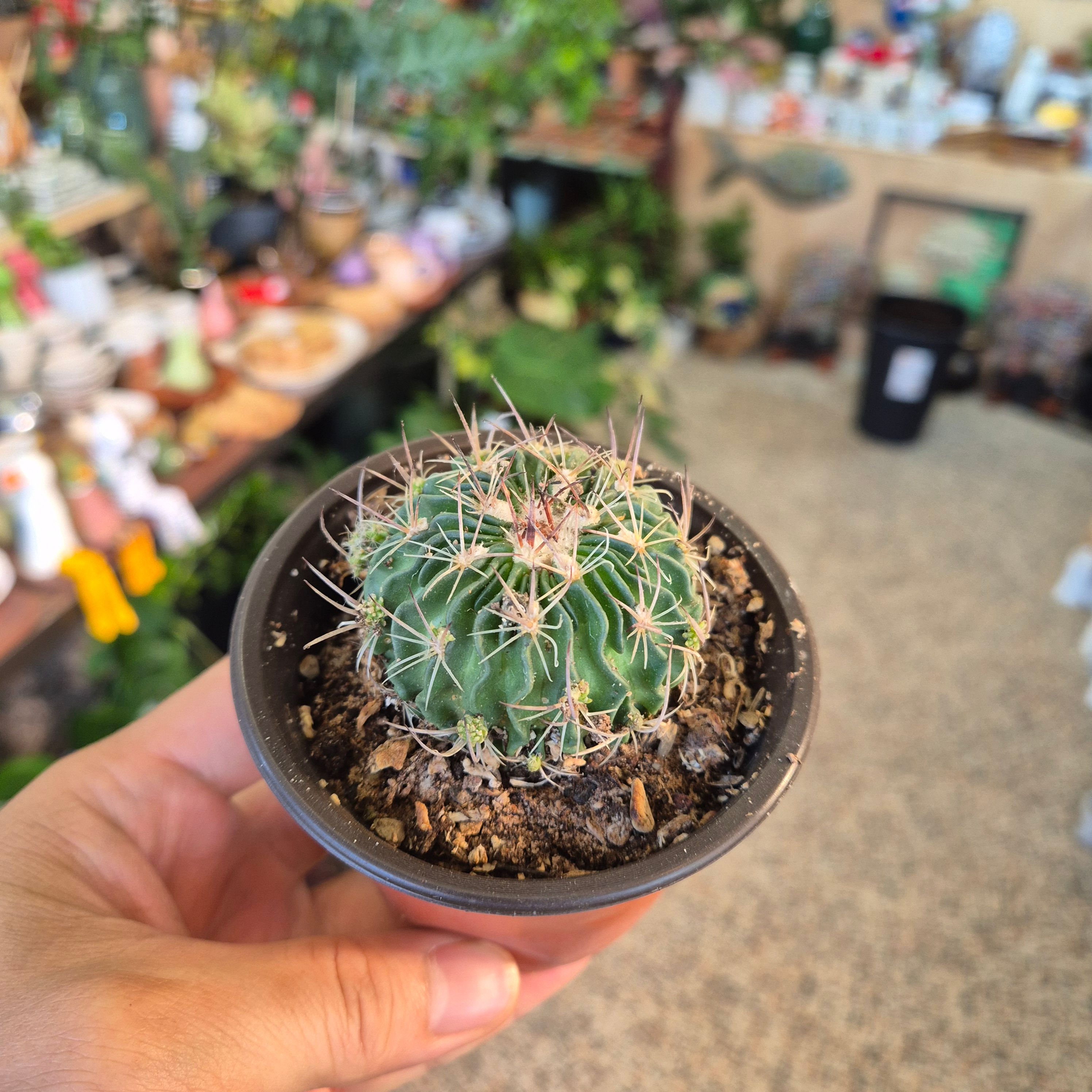

Stenocactus crispatus (Brain Cactus) 7242
🌿 Meet the Brain Cactus, scientifically known as Stenocactus crispatus, a member of the Cactaceae family. Native to the rocky limestone regions of central Mexico, this small globular cactus thrives in arid environments where rainfall is scarce and sunlight is abundant. The deeply wavy ribs that cover its body create an unmistakable brain-like appearance, which is how it earned its common name. This is a beginner-friendly cactus that forgives occasional neglect and actually prefers to be left alone most of the time. Here's a fun fact: the wavy ribs aren't just for show—they allow the cactus to expand and contract as it stores and uses water, helping it survive months without rain.
FOLIAGE AND GROWTH HABIT
The Brain Cactus grows in a compact, spherical shape that stays low to the ground, making it perfect for small spaces. The body is covered in thin, accordion-like ribs that twist and fold in on themselves, giving the plant its distinctive wrinkled texture. The surface is typically pale green to blue-green, and the ribs are lined with clusters of short, pale spines that radiate outward. The spines are not sharp or aggressive, so handling is relatively safe. The overall effect is sculptural and striking, with a texture that invites closer inspection.
FLOWER DETAILS
When mature, the Brain Cactus produces small, delicate flowers that emerge from the crown. The blooms are usually white, cream, or pale pink with thin petals and a papery texture. They have a subtle, pleasant fragrance that's mild but noticeable up close. The flowers are dainty and short-lived, typically lasting only a day or two, but they add a soft contrast to the cactus's rugged appearance. Flowering usually happens in late winter or early spring, especially after a period of cooler temperatures and reduced watering. To encourage blooming, give your cactus a winter rest with cooler conditions and hold back on water from November through February.
CARE INSTRUCTIONS
- 🌞 Light: Bright, direct sunlight for at least 4 to 6 hours daily. A south-facing window is ideal. Will tolerate some partial shade but grows best in full sun.
- 💧 Water: Water deeply but infrequently. In spring and summer, water every 2 to 3 weeks when the soil is completely dry. In fall and winter, reduce to once a month or less. Use the soak-and-dry method: water thoroughly, then let it drain completely.
- 🌡️ Humidity: Prefers low humidity, ideally 10% to 30%. Average indoor air is usually fine. Avoid placing near humidifiers or steamy bathrooms.
- 🪴 Soil: Fast-draining cactus or succulent mix. Add perlite or coarse sand if needed to improve drainage.
- 🏺 Potting: Use a shallow, unglazed terracotta pot with drainage holes. Size should be just slightly larger than the cactus base. Repot every 2 to 3 years in spring.
- 🌱 Growth rate: Very slow. May grow 1 to 2 cm in diameter per year. Mature size is typically 10 to 15 cm wide and 8 to 12 cm tall.
- 👩🌾 Fertilizing: Feed once in spring and once in early summer with a diluted cactus fertilizer at half strength. Do not fertilize in fall or winter.
- 🐾 Pet friendly: Yes. Non-toxic to cats and dogs. The spines can poke, but the plant itself is safe if ingested.
WHERE TO PUT IT
The Brain Cactus does best on a sunny windowsill, especially one that faces south or west. It's also great on a desk, shelf, or plant stand where it can soak up direct light for most of the day. Consider grouping it with other succulents or cacti for a desert-themed display. This plant is well-suited to dry indoor environments, so it works well in living rooms, home offices, and even bedrooms with good light. Avoid placing it in bathrooms, kitchens, or any room with high humidity or limited light. Keep it away from cold drafts or spots where it might get watered accidentally by being too close to other plants.
RARITY ASSESSMENT
common
+7242)